The short version
Around Wauwatosa, WI, raccoon control means three jobs: live-trap and remove the raccoon, seal the entry it used, and secure the trash and food that drew it in. Around Wauwatosa, raccoons are a rabies vector — keep your distance and call a licensed professional.
- Around Wauwatosa, WI, raccoons are nocturnal and den in attics, chimneys, and crawl spaces.
- They're a primary rabies vector — a daytime raccoon around Wauwatosa, WI can be sick.
- Trapping and relocation are regulated, so removal around Wauwatosa, WI is a licensed professional's job.
- Seal the entry and secure the trash around Wauwatosa, WI, or the next raccoon moves in.
For anyone in Wauwatosa, WI hearing nighttime noises in the attic, seeing raccoons near the house, or finding droppings. If a raccoon around Wauwatosa, WI is acting sick or aggressive, call animal control first.
What to look for
Raccoons don't wander into a Wauwatosa, WI attic by accident — they're looking for a warm, dry den, especially in spring when females birth their kits. Around Wauwatosa, WI, raccoons are heaviest in spring, when females den from March through June, with a second push in fall, and the common raccoon is the only species you'll meet. Around Wauwatosa, the real problem isn't the raccoon you hear; it's the entry it found and the food that drew it close.
- 1Around Wauwatosa, WI, the clearest sign is scratching or thumping overhead at night — raccoons are nocturnal and den in attics.
- 2Around Wauwatosa, torn shingles, a bent soffit, or a damaged chimney cap marks where a raccoon forced its way in.
- 3Tipped trash cans and scattered garbage around a Wauwatosa home are classic raccoon work.
- 4A raccoon latrine — repeated droppings in one spot in a Wauwatosa attic or yard — is a health concern, not just a mess.
- 5Around Wauwatosa, WI, a raccoon wandering in daylight can signal rabies or distemper, so keep your distance and call.
- 6Around Wauwatosa, noises and young kits crying in the wall in spring mean a mother has denned to raise a litter.
Why it’s worth acting soon
- Around Wauwatosa, WI, raccoons are a primary rabies vector (CDC), so a daytime or aggressive raccoon is a genuine safety risk.
- Raccoon roundworm eggs in a Wauwatosa, WI latrine can survive for years and cause serious illness if ingested (CDC) — cleanup needs care.
- A mother raccoon denning in a Wauwatosa, WI attic in spring will damage insulation and structure raising her litter.
- Leaving a Wauwatosa, WI entry open means the next raccoon moves in after the first is removed — the gap doesn't fix itself.
Treatment options and typical costs
Inspection and entry mapping
$150–$300
A provider finds every gap a raccoon could use on your Wauwatosa, WI home — roofline, soffits, chimney, and vents — and confirms whether one is denning now.
- Time
- 45–90 minutes
- Best for
- Any Wauwatosa, WI sighting or noise.
Trapping and removal
$300–$600
Live trapping and removal of the raccoon, done legally — Wisconsin regulates wildlife handling, so around Wauwatosa a licensed operator does this work.
- Time
- 1–3 days
- Best for
- A raccoon denning in a Wauwatosa, WI attic, chimney, or crawl space now.
Exclusion and repair
$400–$1,500+
Sealing the entry points and repairing the damage so the next raccoon can't follow — the part that actually lasts on a Wauwatosa, WI home.
- Time
- Half day to a full day
- Best for
- Repeat visitors or a Wauwatosa, WI home with known gaps.
Cleanup and disinfection
$300–$1,000+
Removing a Wauwatosa, WI latrine and contaminated insulation safely, with proper gear, so the roundworm risk is handled and the attic is usable again.
- Time
- Half day to a day
- Best for
- A Wauwatosa, WI attic or crawl space with droppings.
Prices are typical published ranges. Ask what’s included before you compare quotes.
 Inside, look for flattened insulation, latrines and nesting spots. Leave cleanup to someone with the right gear.
Raccoons around Wauwatosa.
Around Wauwatosa, the raccoon you'll meet is the common raccoon — nocturnal, omnivorous, and clever with its paws. Around Wauwatosa, it's drawn to unsecured trash, pet food, and the warm, dry space of an attic or chimney, especially in spring when females den to raise kits.
When raccoon season runs around Wauwatosa.
Around Wauwatosa, spring is when you'll hear kits in the wall; fall is the second push as they look for winter shelter. Around Wauwatosa, WI, raccoon activity is heaviest in spring, when females den from March through June, with a second push in fall. Wauwatosa is with around 72% average humidity and summer highs near 82°F.
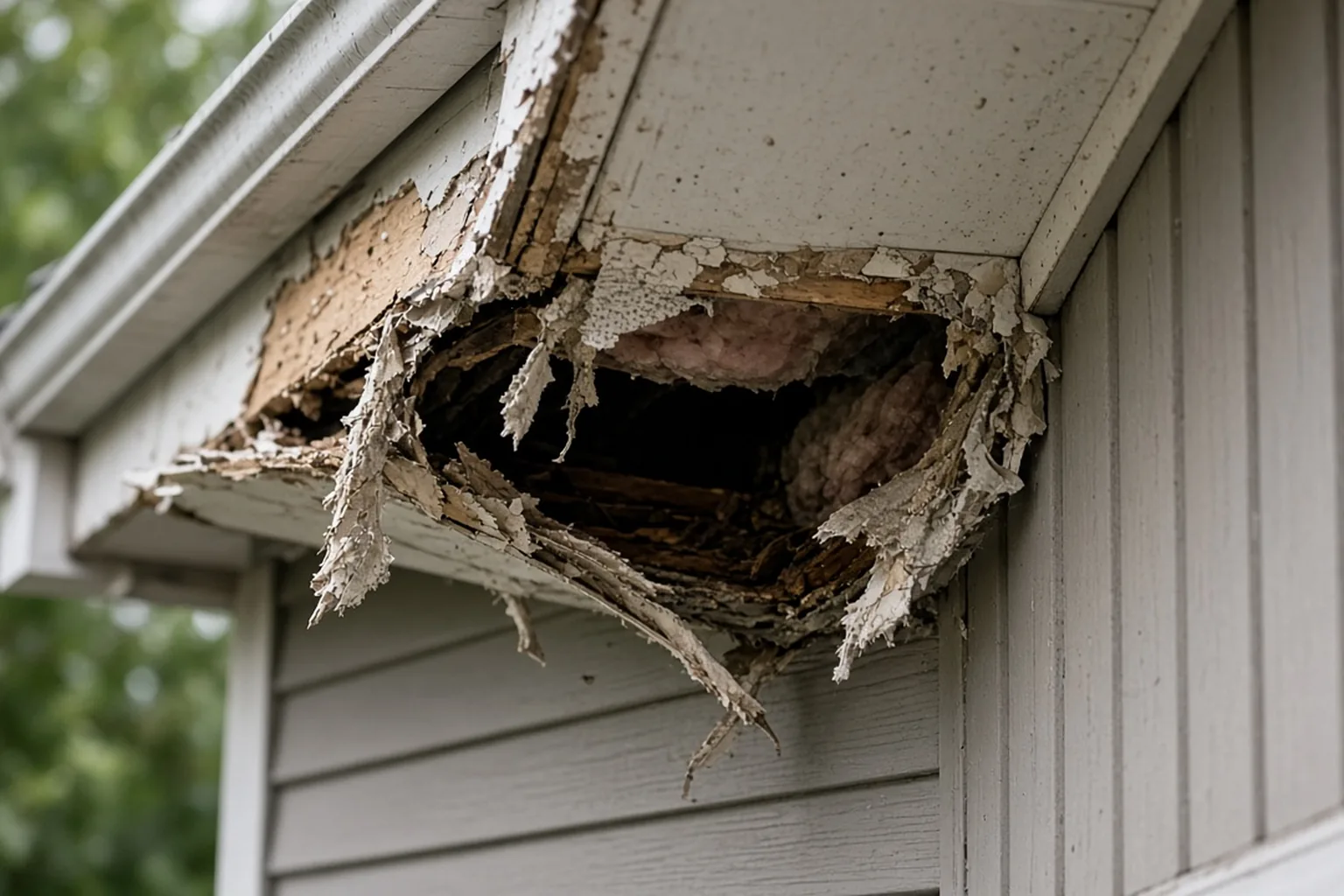 Torn soffits like this are typical raccoon damage. Seal with heavy metal mesh once they're gone.
How they get into Wauwatosa homes.
Around Wauwatosa, raccoons enter through the roof — torn soffits, bent vents, uncapped chimneys, and loose shingles are the usual doors. Around Wauwatosa, overhanging tree branches make those entries easier, which is why trimming them back is part of prevention.
The risks around Wauwatosa, WI.
Neither is a DIY situation. Their droppings can carry raccoon roundworm, which is dangerous if ingested. Raccoons are a primary rabies vector, so a raccoon wandering in daylight around Wauwatosa, WI should be treated as possibly sick. Two risks matter.
Getting them out the right way around Wauwatosa.
Around Wauwatosa, the humane, legal method is live trapping by a licensed provider, then exclusion and cleanup. Around Wauwatosa, a provider will also check for kits — separating a mother from a litter is both inhumane and a mess you don't want in your attic.
The three jobs of raccoon control in Wauwatosa.
- Every raccoon problem around Wauwatosa is three jobs in order. - Get the animal out: live-trap and relocate it, legally and humanely.
- Close the door on the Wauwatosa attic: seal the roofline, cap the chimney, screen the vents, and wait for the young to leave; around Wauwatosa trapping is usually deferred until late summer.
- Remove the reason: lock the bins, pull pet food in at night, and pick up fallen fruit; Wauwatosa yards with bird feeders are a steady draw.
Around Wauwatosa, a quote usually covers only the first job — ask which of the three it covers.
What raccoon control costs in Wauwatosa.
Around Wauwatosa, published ranges put trapping and removal around $300 to $600, with exclusion, repair, and cleanup adding more. For a Wauwatosa home, the four things that move the price are the entry points, whether a litter is present, whether a latrine needs cleaning, and the repair work.
What affects the price
- Whether raccoons are denning in a Wauwatosa, WI attic versus just passing through the yard.
- The number and location of entry points on a Wauwatosa, WI home that need sealing.
- Whether a litter is present — removal is more involved when kits are involved on a Wauwatosa, WI property.
- Whether a Wauwatosa, WI latrine needs cleanup and disinfection.
- The repair work required after a raccoon damages a Wauwatosa, WI roofline or soffit.
- Emergency or same-day calls around Wauwatosa, WI usually cost more.
📊
What worries you most about raccoons?
When to call for help
Around Wauwatosa, WI, call a professional when a raccoon is denning in the attic, chimney, or crawl space, when you see one wandering in daylight, or when you find a latrine. Raccoon handling is regulated in Wisconsin, and a licensed provider has the right traps, gear, and knowledge to do it safely and legally.
What you can do yourself
Around Wauwatosa, WI, prevention is safely yours: secure the trash, cap the chimney, trim the branches, and screen the vents. What isn't yours is the raccoon itself in Wauwatosa — trapping and relocation are regulated, and a cornered mother protecting kits will fight. The cleanup is a pro's job too, because roundworm eggs in a Wauwatosa latrine are a real health hazard.
Raccoons in Wauwatosa
Around Wauwatosa, raccoons are nocturnal and den in attics, chimneys, and crawl spaces — and because they're a rabies vector, removal belongs with a licensed professional. Around Wauwatosa, WI, raccoon activity is heaviest in spring, when females den from March through June, with a second push in fall. Wauwatosa is a city founded in 1835, with summer highs near 82°F.
Local research
Raccoons in Wauwatosa, WI: what the public record shows
Before you compare quotes, it helps to know which raccoons actually live in Wisconsin, when they are busiest around Wauwatosa, and what the state figures look like. Everything below links to the agency or university page it came from.
Preferred removal method for an attic litter
Wisconsin DNR advises making the space less appealing so the mother moves the kits herself, one at a time over several nights.
Wisconsin Department of Natural ResourcesRaccoon species recorded in Wisconsin
- Raccoon (Procyon lotor) — Present in all 48 contiguous states; furbearer/game animal in most, with seasons, but nuisance take is generally allowed on one's own property.
When raccoons are busiest around Wauwatosa
Kits born April to May.
Rules that apply in Wisconsin
For context, nationally
- 29% — Share of U.S. rabid animals that are raccoons. CDC
- 10% — Raccoons that expose people or pets and turn out rabid (within endemic range). CDC
Sources: Wisconsin Department of Natural Resources; CDC; Pest Notes: Raccoons. Figures are quoted as the source prints them. How we check our sources
Simple ways to keep raccoons away
- Around Wauwatosa, WI, secure trash cans with locking lids and take them out only on pickup morning.
- On a Wauwatosa home, cap the chimney and screen vents and soffits so raccoons can't climb in.
- Around Wauwatosa, WI, trim tree branches back from the roof — raccoons climb them to reach the house.
- Around Wauwatosa, seal gaps under porches, decks, and sheds where raccoons could den.
- Around Wauwatosa, WI, remove pet food and bird feeders at night, which draw raccoons close.
- Around Wauwatosa, check the roofline each spring and fall for new gaps before denning season.
 Heavy metal mesh keeps raccoons out of vents. Foam and light screen won't.
Did you know?
Around Wauwatosa, WI, the raccoon's sensitive front paws let it open latches, turn knobs, and untie knots.
A raccoon in Wauwatosa can remember a solved problem for up to three years.
Raccoon roundworm eggs in a Wisconsin latrine can survive for years in the soil — which is why cleanup needs care.
Questions people ask
When do raccoons den in Wauwatosa, WI?
Around Wauwatosa, WI, raccoon activity is heaviest in spring, when females den from March through June, with a second push in fall. Spring is the denning season — females move into attics and chimneys to birth and raise kits — which is when most Wauwatosa conflicts start.
Are raccoons dangerous around Wauwatosa, WI?
Around Wauwatosa, their droppings also carry raccoon roundworm, a serious health hazard — so keep your distance and don't handle either. Raccoons are a primary rabies vector, and a raccoon active in daylight near Wauwatosa can be sick. Yes, for two reasons around Wauwatosa, WI.
How do I get a raccoon out of my Wauwatosa attic?
Call a licensed provider — in Wisconsin, raccoon trapping and relocation are regulated, and a mother with kits needs special handling. Don't block the entry while the raccoon is still inside your Wauwatosa attic, or you'll trap it in your home.
What does raccoon removal cost in Wauwatosa, WI?
For a Wauwatosa, WI home, published ranges put trapping and removal around $300 to $600, with exclusion, repair, and cleanup adding more. Your final price in Wauwatosa depends on the entry points and whether a litter or latrine is involved.
Can I trap a raccoon myself in Wauwatosa, WI?
In most states, no — wildlife trapping and relocation are regulated, and Wisconsin is no exception. Around Wauwatosa, WI, a licensed provider is required, and doing it wrong can separate a mother from her kits or expose you to rabies and roundworm.
Why do raccoons keep coming back to my Wauwatosa, WI home?
Seal the entry and secure the food. If the roof gap on your Wauwatosa home stays unsealed and the trash stays accessible, each removal just makes room for the next raccoon. Because around Wauwatosa, WI the entry is still open and the food is still available.
What should I do if I see a raccoon in daylight around Wauwatosa, WI?
Around Wauwatosa, WI, keep people and pets away and don't approach it — daytime activity in raccoons can mean rabies or distemper. Call animal control or a wildlife professional serving Wauwatosa to handle it.
Nearby cities
Related guides
Sources (4)
The facts in this article come from the public sources listed above. Every home is different, so ask the company you talk to about pricing and what’s included. Published by Raccoon Exterminator · Updated October 13, 2026 · How we write these guides