The short version
A raccoon inspection covers the roofline and vents for entry points, then the attic for denning signs and latrines — and, in spring, whether a litter is present. Get the findings in writing so you know what the removal and cleanup involve.
- An inspection maps the entry point, the denning signs, and any latrine.
- A latrine means a raccoon is living there, not passing through.
- In spring, the inspection should check for kits.
- Get the findings in writing.
For anyone hearing noises in the attic or seeing raccoons near the house who wants to know what's actually going on.
What to look for
The noise in the attic tells you something is there; the inspection tells you what and how it got in. Without a proper roof-and-attic walk, you can't tell a raccoon denning with kits from a one-night visitor — and the fix is very different.
- 1Scratching or thumping overhead at night — raccoons are nocturnal and den in attics.
- 2Torn shingles, a bent soffit, or a damaged chimney cap where a raccoon forced its way in.
- 3Tipped trash cans and scattered garbage.
- 4A raccoon latrine — repeated droppings in one spot.
- 5A raccoon wandering in daylight, which can signal rabies or distemper.
- 6Kits crying in a wall in spring, meaning a mother has denned to raise a litter.
Why it’s worth acting soon
- Raccoons are a primary rabies vector, so a daytime or aggressive raccoon is a real safety risk.
- Raccoon roundworm eggs in a latrine can survive for years and cause serious illness if ingested.
- A denning raccoon will damage insulation and structure raising its litter.
- An open entry means the next raccoon moves in after the first is removed.
A primary vectorRaccoons in U.S. animal rabiesCDC $300–$600Typical raccoon removal (published range)Fixr Serious in latrinesRaccoon roundwormCDC Treatment options and typical costs
Inspection and entry mapping
$150–$300
A provider finds every gap a raccoon could use and confirms whether one is denning now.
- Time
- 45–90 minutes
- Best for
- Any sighting or nighttime noise.
Trapping and removal
$300–$600
Live trapping and removal of the raccoon, done legally by a licensed provider.
- Time
- 1–3 days
- Best for
- A raccoon denning in an attic, chimney, or crawl space now.
Exclusion and repair
$400–$1,500+
Sealing the entry points and repairing the damage so the next raccoon can't follow.
- Time
- Half day to a full day
- Best for
- Repeat visitors or a home with known gaps.
Cleanup and disinfection
$300–$1,000+
Removing a latrine and contaminated insulation safely, with proper gear.
- Time
- Half day to a day
- Best for
- An attic or crawl space with droppings.
Prices are typical published ranges. Ask what’s included before you compare quotes.
 Inside, look for flattened insulation, latrines and nesting spots. Leave cleanup to someone with the right gear.
What the inspector checks.
A thorough inspection covers the roofline, chimney, vents, and soffits for entry points, then the attic for denning signs — matted insulation, droppings, and tracks. The inspector is mapping the entry and the activity, not just confirming "something is up there."
Denning signs vs. passing-through signs.
A latrine — repeated droppings in one spot — means a raccoon is living there, not just passing through. Matted insulation and a flattened nesting area confirm it. Passing-through signs are lighter: a few tracks, some disturbed insulation.
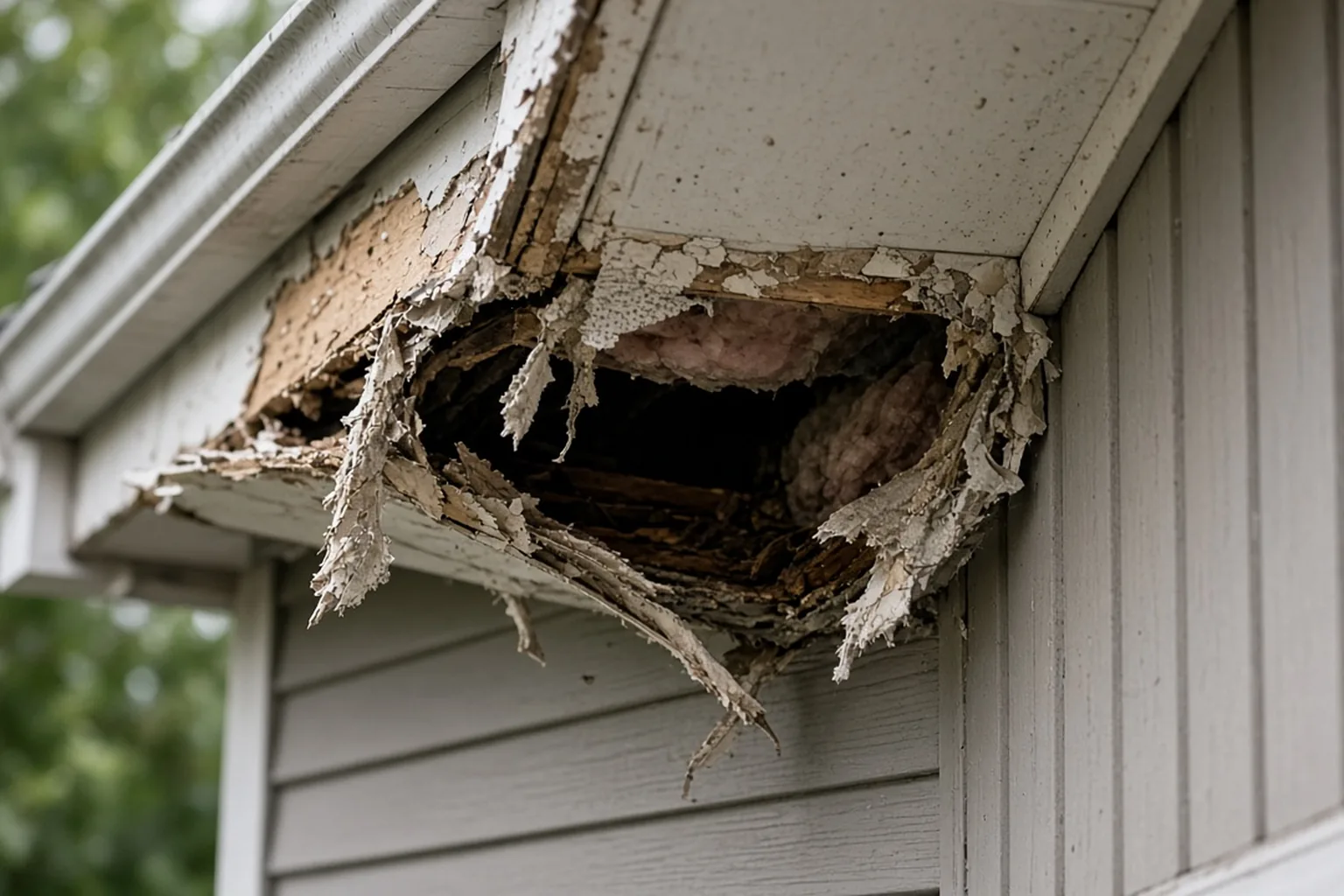 Torn soffits like this are typical raccoon damage. Seal with heavy metal mesh once they're gone.
Checking for a litter.
In spring, an inspection should specifically check for kits, because removing a mother without them leaves babies behind. Kits make a soft chattering sound and are usually hidden in the deepest part of the attic or a wall void.
What to ask the inspector.
Ask which entry points were found, whether a raccoon is denning now, whether kits are present, and whether there's a latrine. The answers tell you what the removal and cleanup will involve — and they should be in writing.
The roofline walk.
The inspection starts on the roof, not in the attic. The inspector checks the chimney, vents, soffits, and shingles for the gap a raccoon used — then goes inside to confirm the denning signs. The roof is where the entry is.
Interpreting what's found.
A latrine means a raccoon has been denning, not just passing through. Matted insulation and a flattened nest confirm it. A few scattered droppings and tracks suggest a visitor. The distinction changes the whole removal.
The kit question.
In spring, the inspection must answer whether kits are present, because a mother is removed differently than a lone raccoon. Kits hide deep in the attic or a wall void, and a good inspector specifically looks for them.
Getting findings in writing.
Ask for the inspection in writing: which entries were found, whether a raccoon is denning now, whether kits are present, and whether there's a latrine. That record is your removal plan and your comparison tool.
When the noise isn't a raccoon.
Not every attic noise is a raccoon — squirrels, birds, and even rodents make sounds up there. The inspection is what tells you which. A raccoon is heavy and nocturnal; a squirrel is light and active at dawn and dusk. Getting the animal right changes the whole job.
A seasonal inspection rhythm.
The most useful times to inspect are early spring, before denning season, and late summer, before the fall push. Catching a gap before a raccoon does is the whole point of the inspection — timing it to the raccoon's own calendar makes it pay.
What affects the price
- Whether raccoons are denning in the attic versus just passing through the yard.
- The number and location of entry points that need sealing.
- Whether a litter is present.
- Whether a latrine needs cleanup and disinfection.
- The repair work required after roofline or soffit damage.
- Emergency or same-day calls.
📊
What is your biggest concern about raccoons on your property?
When to call for help
Call a licensed professional when a raccoon is denning in the attic, chimney, or crawl space, when you see one wandering in daylight, or when you find a latrine. Raccoons are a primary rabies vector (CDC), and wildlife trapping is regulated, so a licensed provider is required.
What you can do yourself
What isn't yours is the raccoon itself — trapping is regulated, and the latrine cleanup is a health job, because raccoon droppings can carry roundworm (CDC). Leave both to a licensed professional. Prevention is safely yours: secure the trash, cap the chimney, trim the branches, and remove pet food at night.
Where you live matters
Raccoons are found nationwide and are a regulated wildlife species and a primary rabies vector. Removal and cleanup belong with a licensed professional. The most useful first step in Raccoon Inspection is to note where you have seen raccoons activity and when it appears, so an inspection is faster and the quote more accurate. In Raccoon Inspection, checking the usual entry points, moisture spots, and sheltered areas near the structure usually turns up the conditions that are letting them in. A local provider who knows Raccoon Inspection can point out the specific things that matter most here before you commit to a plan. In Raccoon Inspection, before you book, ask whether the inspection is included, what the treatment plan covers, how many visits to expect, and what the written quote includes. In Raccoon Inspection, getting the scope, the prep steps, and any follow-up terms in writing makes it much easier to compare providers fairly, and a good provider will walk you through each of these without pressure. In Raccoon Inspection, a little preparation usually makes the visit more useful: clear access to the areas where you have seen activity, put away loose items, and note anything you have noticed recently. In Raccoon Inspection, if you have photos or a rough timeline of when the problem started, share them, because those details help the provider confirm what is going on and give you a more accurate scope and price. In Raccoon Inspection, after treatment, ask what to watch for and when a follow-up visit would make sense. In Raccoon Inspection, most problems do not disappear after a single visit if the conditions that caused them are still present, so the plan should spell out what changes afterward and how you will know it worked. Prevention is the part that keeps the problem from coming back. In Raccoon Inspection, that usually means sealing the gaps and moisture issues the inspection turned up, adjusting what is stored near the structure, and staying on top of the small warning signs before they become a bigger job. Most bat work is about the roofline and the attic. In Raccoon Inspection, bats squeeze through gaps as small as three-eighths of an inch, so an inspection looks closely at ridge vents, gable vents, soffits, and the joints where the roof meets the wall. In Raccoon Inspection, a short watch at dusk is often the clearest way to confirm where they are getting in and out. In Raccoon Inspection, if you have seen a bat indoors, keep the room closed and do not handle it bare-handed. In Raccoon Inspection, a bat found in a room where someone was sleeping, or one that may have touched a child or pet, is treated as a possible exposure, so contact public health or a doctor before releasing it.
Simple ways to keep raccoons away
- Secure trash cans with locking lids and take them out only on pickup morning.
- Cap the chimney and screen vents and soffits.
- Trim tree branches back from the roof.
- Seal gaps under porches, decks, and sheds.
- Remove pet food and bird feeders at night.
- Check the roofline each spring and fall for new gaps.
 Heavy metal mesh keeps raccoons out of vents. Foam and light screen won't.
Did you know?
Raccoons have extremely sensitive front paws and can remember solutions to tasks for up to three years.
A raccoon's facial mask reduces glare and may sharpen its night vision.
Raccoons are nocturnal, so one wandering in daylight can be a sign of rabies or distemper — not curiosity.
Questions people ask
How long does a raccoon inspection take?
Usually 45 to 90 minutes, depending on the roof and attic access. A thorough one covers the roofline, chimney, vents, and attic interior.
Should I go into the attic with the inspector?
If it's safe, yes — you'll see the entry points and the denning signs for yourself. If a raccoon is present, the inspector will tell you to stay out.
Is an inspection free?
Some credit the inspection toward the work you book; others charge separately. Ask up front. It varies by provider.
What should I do before the inspector arrives?
Clear access to the attic hatch if you can. Don't try to look yourself if a raccoon may be present. Note when and where you hear noises, and whether you've seen a raccoon.
Sources (5)
The facts in this article come from the public sources listed above. Every home is different, so ask the company you talk to about pricing and what’s included. Published by Raccoon Exterminator · Updated October 13, 2026 · How we write these guides